LEED certification is now a benchmark standard for the design and construction of large sustainable buildings such as airports, hangars, hospitals, stadiums and complex infrastructures. In these contexts, sustainability is an increasingly decisive factor in investment decisions.
Integrating LEED certification into large buildings means, in fact, focusing on measurable performance: energy efficiency, reduced consumption, indoor environmental quality and resource management; elements that directly impact the value, competitiveness and reliability of the project.
The real difference lies in the ability to manage the certification process from the very outset, using a coordinated approach: let’s therefore look at all the benefits, how to obtain it and who to contact.
What is LEED certification for buildings?
LEED (Leadership in Energy and Environmental Design) certification is an international rating system that assesses the sustainability of buildings throughout their entire life cycle. It applies to both new builds and refurbishment projects, with criteria tailored to the complexity of the project.
“Green Building” refers to the practice of creating structures and employing processes that are environmentally responsible and resource-efficient throughout a building’s entire life cycle.
In the case of large buildings, the LEED system examines design and construction choices, influencing architecture, structures and systems. The result is a comprehensive assessment of the building’s environmental and operational performance.
How LEED certification works
The process is based on a points system: each design strategy contributes to the accumulation of credits across various environmental categories. The final score determines the level of certification achieved.
The assessment areas cover key aspects such as:
- energy consumption
- water use
- indoor air quality
- materials used
- site management
Design choices are interlinked and have an impact on multiple areas simultaneously.
The benefits of LEED certification in large buildings
Green building certification schemes, such as LEED, provide a practical tool for improving a building’s performance and optimising costs in the long term. In large-scale developments, their impact extends beyond the design phase to encompass management and maintenance.
Benefits of LEED certification for large-scale assets
For complex infrastructure, certification translates into measurable benefits. Reduced energy consumption helps to keep operating costs down, whilst optimising systems improves reliability and operational continuity. At the same time, the quality of the indoor environment affects user comfort and the performance of the spaces.
From a financial perspective, LEED-certified buildings are more attractive to investors and funds focused on ESG criteria. This is also reflected in easier access to financing instruments dedicated to sustainability.
Highly complex buildings feature high energy consumption, continuous use and intricate building services systems. In this scenario, LEED certification plays a central role, as it directly impacts energy performance and operational management.
Intervening in ventilation, air conditioning, lighting and control systems allows for an improvement in the building’s overall efficiency and a reduction in emissions. This approach is particularly relevant for airports and logistics hubs, where every improvement translates into a significant economic impact.
LEED certification therefore enables savings to be made over the life of the building and helps reduce the environmental impact of buildings: lower operating costs, increased property value, and improved occupant wellbeing.
LEED also aims to achieve far-reaching outcomes, such as:
- Contributing to reversing the process of global climate change;
- Improving human health and individual well-being;
- Protecting and restoring water resources;
- Protecting, enhancing and restoring biodiversity and ecosystem services;
- Promoting sustainable and regenerative cycles of material resources;
- Building a greener economy;
- Improving social equity, environmental justice and the quality of community life.
How to obtain LEED certification: requirements and process
The process of obtaining LEED certification for buildings requires structured planning and careful management of the design phases. Decisions made in the early stages have a decisive impact on the final outcome.
The process begins with the definition of sustainability objectives, continues with the registration of the project and progresses through integrated design. Throughout all phases, the evidence required to demonstrate the achievement of the credits set out in the protocol is collected and validated.
Key technical requirements
Requirements vary depending on the type of building and the desired level of certification. In complex projects, advanced energy analyses, simulations of thermal, hygrometric and lighting performance, water management and the choice of materials are of particular importance.
Indoor air quality and the control of environmental parameters are also key aspects, particularly in buildings such as hospitals or airports, where the well-being of users is an essential requirement.
To manage these elements effectively, it’s necessary to involve a LEED certification engineer from the earliest stages, so as to guide design choices in a manner consistent with the objectives.
LEED certification levels: scores and classification
The LEED system has four certification levels, determined by the overall score achieved by the project.
| Level |
Score |
| Certified | 40–49 points |
| Silver | 50–59 points |
| Gold | 60–79 points |
| Platinum | ≥ 80 points |
In large buildings, achieving high levels such as Gold or Platinum requires a coherent design strategy and rigorous process management.
Il sistema LEED prevede quattro livelli di certificazione, determinati dal punteggio complessivo ottenuto dal progetto.
Who issues LEED certification and how long does it last
The certification is issued by Green Business Certification Inc. (GBCI), an international body responsible for verifying that the project complies with LEED requirements.
For new buildings, certification is awarded at the end of the process and remains associated with the building under the conditions declared during the design phase. In the case of existing buildings, a periodic review is required to verify that performance standards are maintained over time.
The role of integrated engineering in achieving a LEED score
In complex projects, LEED certification requires an integrated approach. A building’s performance depends on the ability to effectively coordinate architecture, structural engineering and building services.
Decisions regarding the building envelope influence energy loads, whilst building services solutions affect energy consumption and comfort. A fragmented approach leads to inefficiencies and makes it more difficult to achieve the highest certification levels.
For example, high-efficiency HVAC systems and integration with renewable energy sources enable improved energy and environmental performance.
MEP design must be developed in coordination with other disciplines, using simulation and modelling tools to verify performance as early as the design phase, such as Green BIM.
LEED Certification Engineering: Technical Partners
Undertaking a LEED certification process requires specific expertise and structured information management. The support of an experienced technical partner helps to minimise risks and optimise the outcome.
A specialist professional guides the project through every stage, from strategy development to final validation. Their contribution covers both technical aspects and coordination between the various disciplines involved.
In pursuit of the company’s vision for a more sustainable and green future, Incide Engineering has developed design solutions that reduce the environmental impact of buildings.
Francesco Boldrini: Head of the Technical Department at Incide, LEED Associate certified
In particular, the Head of the Technical Department, Francesco Boldrini, is a LEED Associate, having completed the course and passed the examination set by the Green Building Council Italia (GBC).
Having a highly qualified professional on board is of strategic importance at the design stage. In particular:
- during the tender award phase
- during the execution phase (credibility and design assurance)
- for design optimisation
- for regulatory compliance
- for risk reduction
- to obtain certification for the works
- for performance monitoring
In this way, it’s possible to develop projects towards increasingly sustainable solutions.
Ciampino Hangar P109: on track for LEED Gold certification
The design of the new Ciampino Hangar P109, developed on behalf of Aeroporti di Roma, will be the first project eligible for LEED Gold certification.
The hangar’s design has, in fact, been underpinned by structural and energy calculations, and the design is aimed at achieving LEED certification.
The commission for ADR’s new hangar involved the development and completion of all activities, from the feasibility study through to the preliminary and detailed design, using integrated BIM coordinated across four disciplines: civil engineering, structural engineering, architecture and MEP.
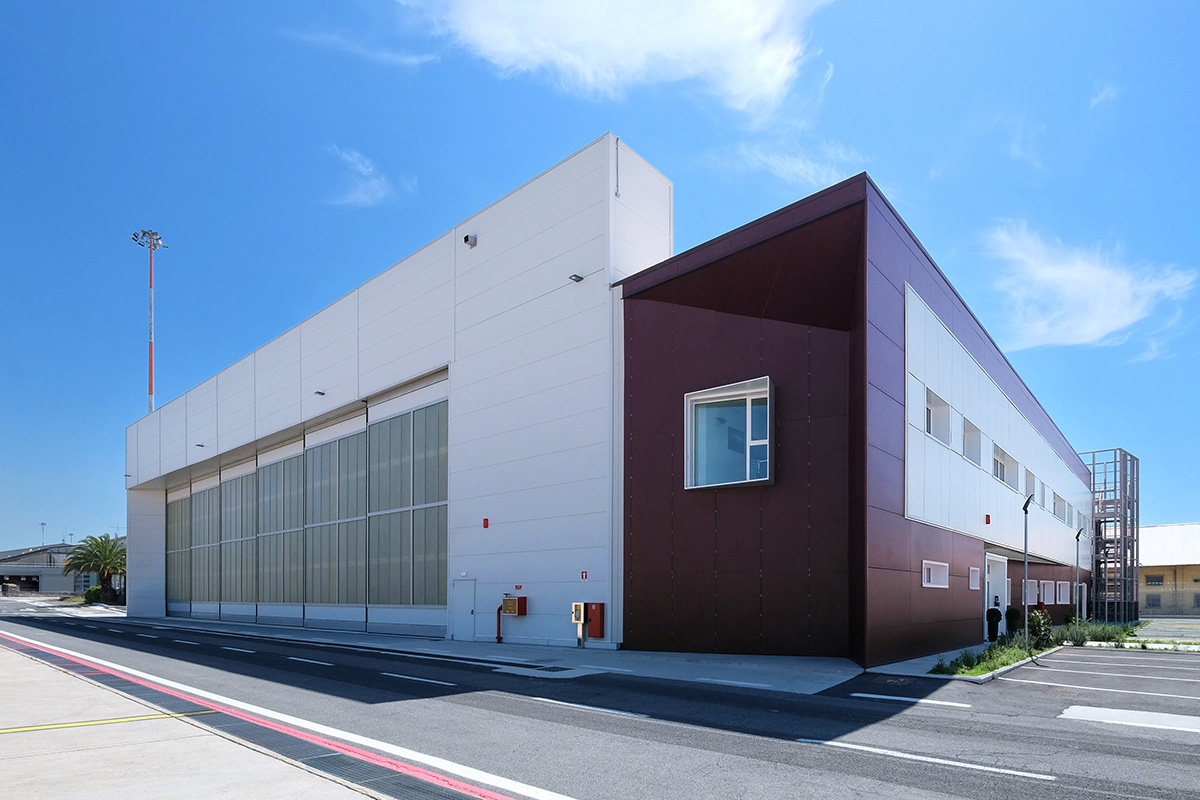
The comprehensive nature of the project, covering all disciplines and the various stages of development (feasibility study, preliminary design, detailed design), enabled the team to forge a strong overall link between the various areas of expertise and the associated software, primarily BIM.
Incide is proud to continue its journey towards sustainability: to this end, the company’s next goals are to provide training for the transition to LEED AP certification and to join the LEED Council.
Contact Incide Engineering for more information or to discuss your project requirements.