In the airport sector, every infrastructure investment is subject to challenging objectives such as reducing operating costs, ensuring service continuity, complying with increasingly stringent environmental standards, and maintaining high levels of safety.
In this context, the replacement of obsolete facilities also has an impact on the operator’s reputation and long-term sustainability.
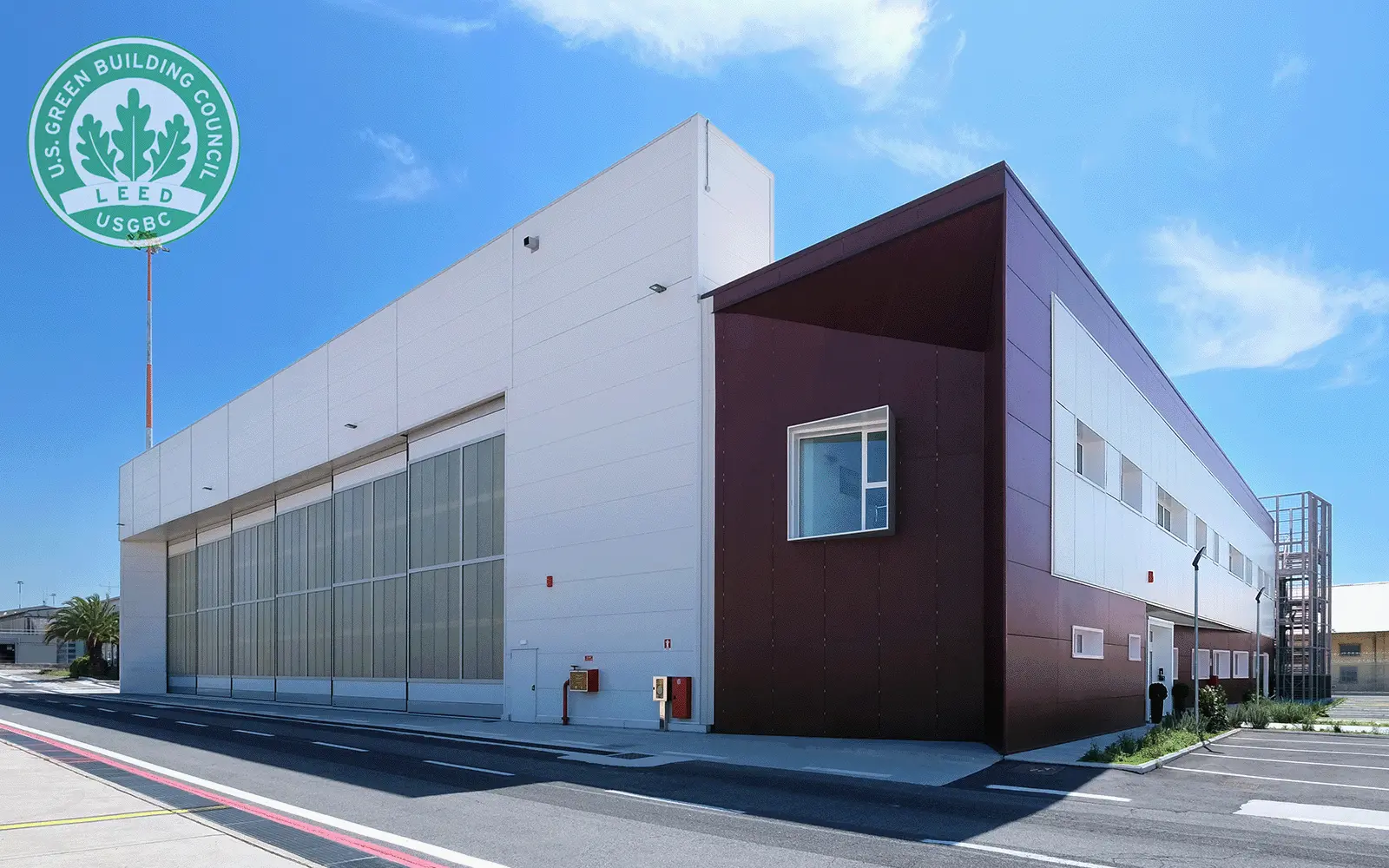
The PG109 Hangar project at Ciampino Airport stems precisely from this need: to transform an infrastructure that is no longer adequate into an integrated system capable of supporting advanced general aviation with energy and management standards aligned with international benchmarks.
An infrastructure designed for modern general aviation
The project involved the complete replacement of an existing hangar, with the aim of bringing all operational functions – aircraft storage, maintenance, offices and reception areas – under one roof.

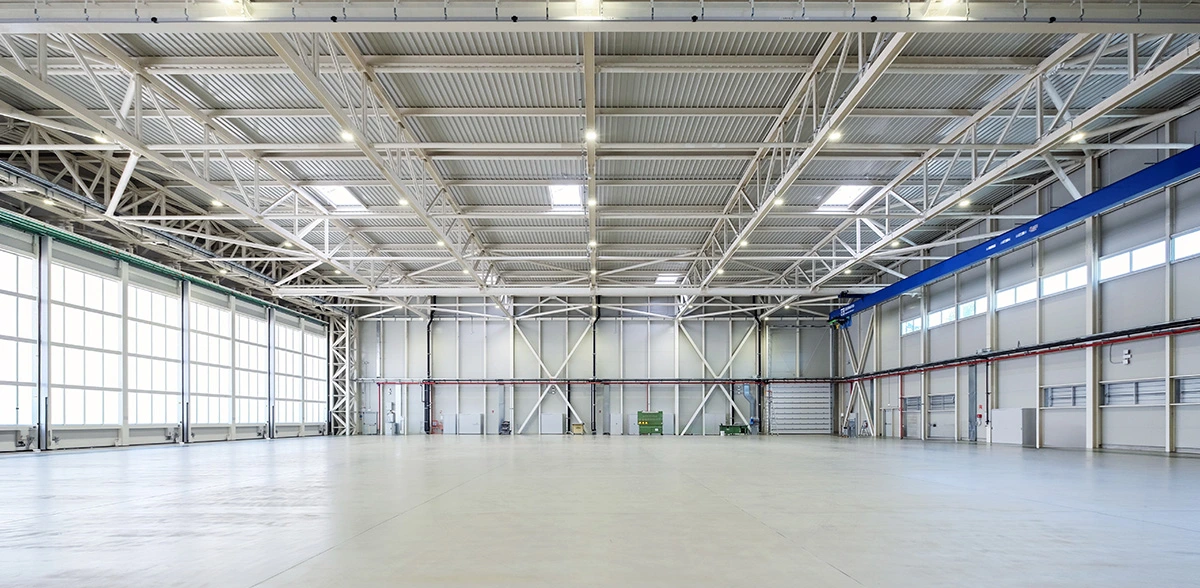
The structure, covering a total area of approximately 3,630 m² and with a clear height of over 11 metres, is designed to accommodate large aircraft, whilst the office and workshop block is seamlessly integrated, facilitating the smooth running of operations.
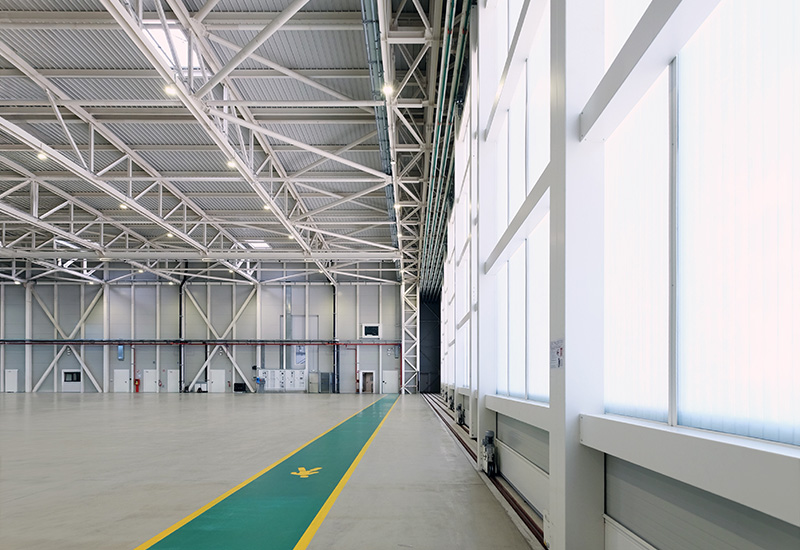
The steel structure allows for large spans with a high degree of internal spatial freedom. This approach is also reflected in the large 43.7-metre sliding door, made of translucent multi-wall polycarbonate. The ability to bring natural light deep into the hangar has a direct impact on energy consumption.
Structure, systems and cladding: a single, high-performance system
In the PG109 project, architecture, structure and systems are not treated as separate elements. The entire building has been conceived as a single system, in which every component contributes to the overall performance.
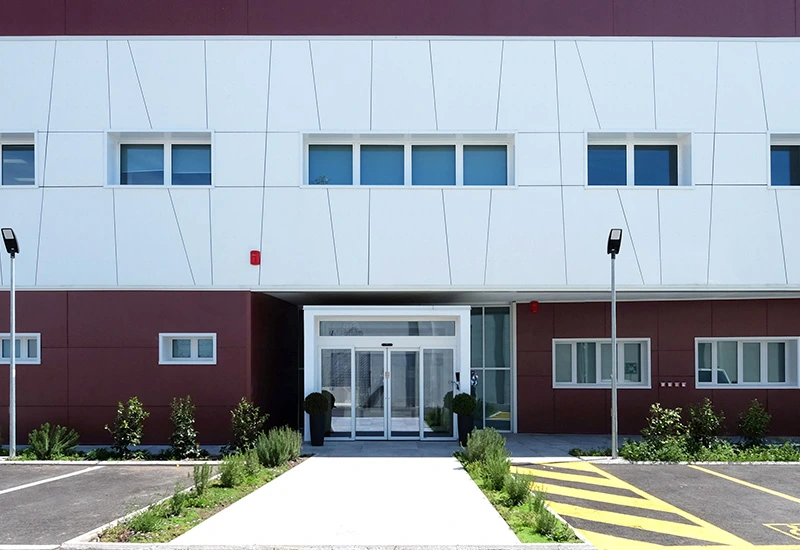
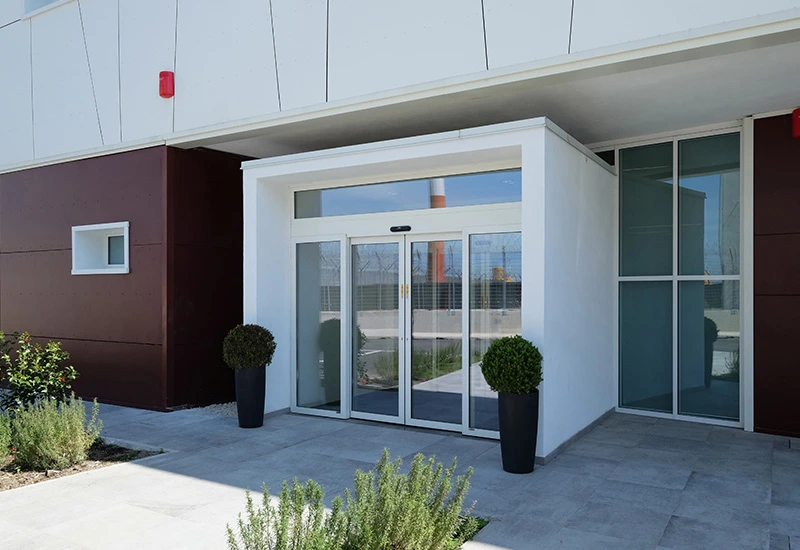
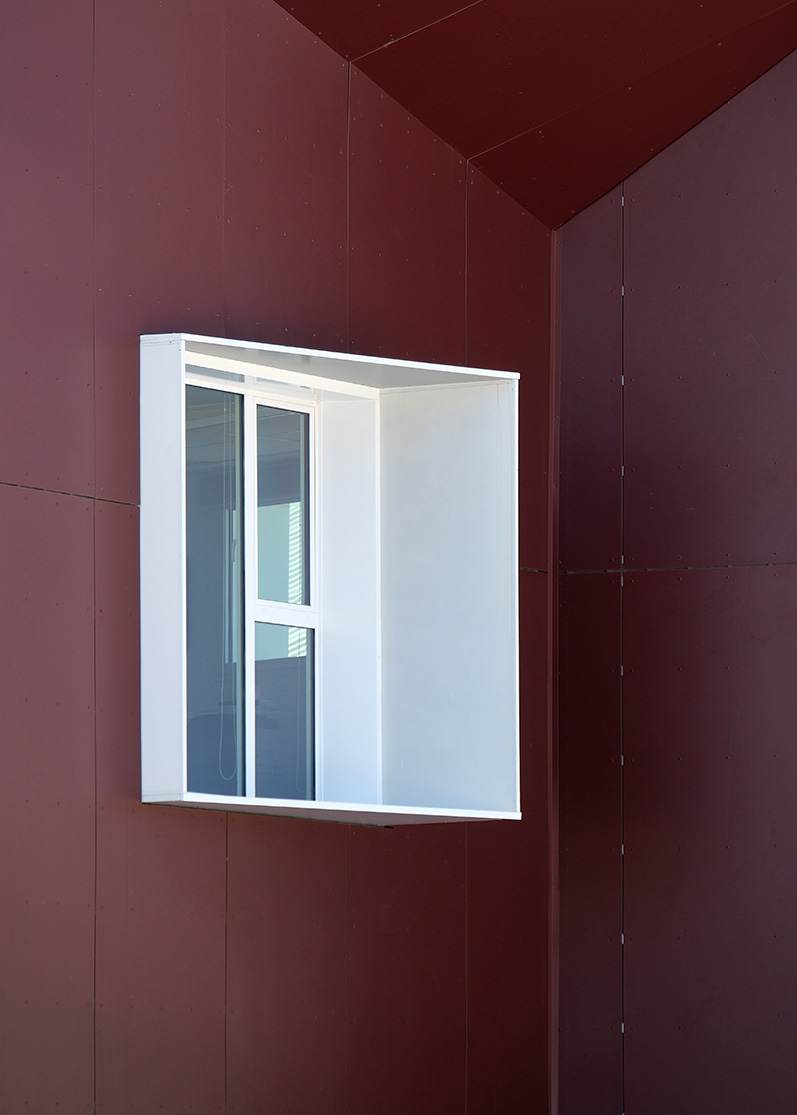
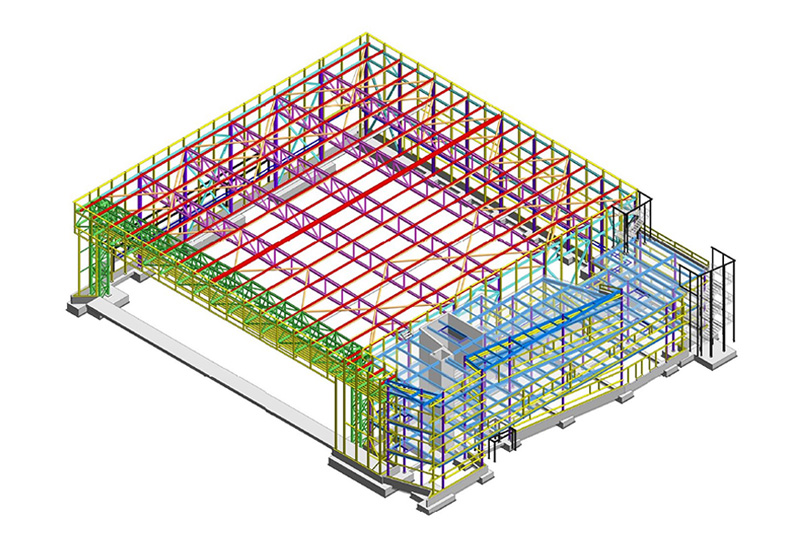
The S355 steel structure, featuring truss beams with spans of up to 47 metres, interacts with a high-performance building envelope. The hangar’s curtain walls use insulated sandwich panels, whilst the office block features ventilated facades, improving thermal and hygrometric performance and indoor comfort.
The roof is also an active part of the energy strategy: the high-reflectance PVC cladding helps to limit the heat island effect, reducing the summer thermal load and improving overall efficiency.
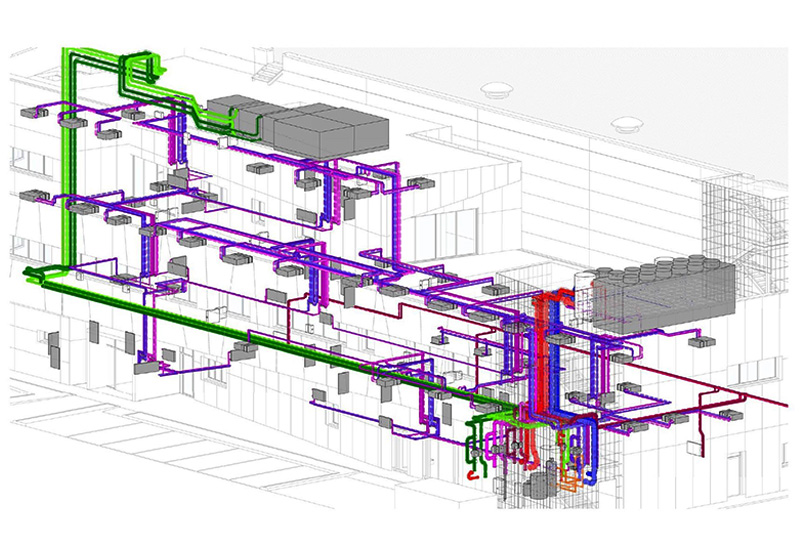
Inside, the choice of building services follows the same integrated logic. The hangar uses a low-temperature underfloor radiant system, particularly effective in high-ceilinged spaces, whilst the offices are air-conditioned using air-source heat pumps with fan coil units and air handling units. The entire building is 100% electric, completely eliminating the use of fossil fuels.
Sustainability certified to LEED Gold and CAM standards
Sustainability must be quantifiable and certifiable: the project was developed with the aim of achieving LEED Gold certification, incorporating the requirements of the Minimum Environmental Criteria (CAM) at every stage, from design to construction.
Energy performance was simulated through dynamic modelling of the entire building-services system, resulting in energy cost savings of 18.84% compared to a reference building. The rooftop photovoltaic system also contributes to this, covering approximately 13% of the building’s energy needs.
Water management was addressed with the same systemic approach. Rainwater is collected and reused for non-potable purposes, whilst low-flow fixtures and smart irrigation systems further reduce consumption.
The choice of materials also follows strict criteria: a significant proportion is derived from recycled content, and the construction site is organised to recover most of the waste produced. In this way, sustainability encompasses the entire construction and life cycle of the building.
Fire safety: designing for real-life scenarios
In an airport context, fire safety is more complex than in other settings: the presence of aircraft with residual fuel necessitates high levels of protection and specialised design solutions.
In the case of Hangar PG109, this translates into a strategy that combines structural fire resistance, active systems and smoke management. The load-bearing structures are protected to ensure adequate fire resistance ratings, whilst the building is equipped with automatic detection systems, hydrants and natural smoke and heat exhaust vents. The latter also contribute to natural ventilation, improving indoor comfort during the warmer months. It is a concrete example of how a technical choice can simultaneously meet safety and environmental quality requirements.
Advanced commissioning: sustained high performance over time
One of the most important aspects of a complex infrastructure is its ability to maintain the performance levels specified in the design phase over time.
For this reason, the PG109 project incorporates an Enhanced Commissioning process, which extends the checks well beyond the final acceptance test. The HVAC systems, the building envelope, the lighting systems and renewable energy sources are tested using specific procedures, including balancing and functional tests. The process continues for up to ten months after the building is occupied, including seasonal checks.
For the client, this means having the certainty that the building actually performs as expected, avoiding discrepancies between the design and actual use.
BIM and managing design complexity
Managing a project with this level of integration requires tools capable of coordinating different disciplines without any loss of information. The use of BIM methodology has enabled the creation of a comprehensive digital model, shared amongst all the disciplines involved: architecture, structural engineering and MEP.
Energy simulations and finite element structural models were developed from the same information environment, ensuring a common basis for all decisions. At the same time, the model supported cost estimation and financial control activities, reducing margins of error and inefficiencies.
Durability and lifecycle management
For airport infrastructure, the quality of a design is also measured by its ability to keep performance and costs under control over time.
In PG109, this translates into choices focused on maintainability: durable materials, high-performance industrial finishes, and construction solutions that facilitate access and maintenance work.
To support these choices, a structured maintenance plan has been developed, with precise guidelines on inspections and scheduled maintenance. The aim is to ensure a long service life whilst maintaining high operational standards.
The transformation of the PG109 area demonstrates how a well-structured project can have an impact on multiple levels: operations, sustainability, safety and long-term management: an example of integration between multidisciplinary engineering, BIM and advanced environmental standards.
This approach reflects Incide Engineering’s expertise in the aviation sector, gained through collaborations with airport operators, design firms, industrial groups and international contractors. From design to construction, Incide manages the entire project lifecycle, ensuring control and quality. This expertise is demonstrated by projects such as the Qatar Airways Maintenance Hangar in Doha, designed to accommodate up to eight aircraft, where technical complexity and operational performance are effectively integrated into the design.