Green building is now a key benchmark for the design of high-performance sustainable buildings, both in private contexts and in complex settings such as schools, hospitals, sports facilities and large public buildings. In a market increasingly focused on ESG criteria, building responsibly means addressing materials, energy, comfort and environmental impact through a technical and measurable approach.
The effectiveness of this approach depends on the ability to integrate different disciplines and translate sustainability principles into concrete design solutions.
What is green building and what are its principles
Green building is a design and construction approach that aims to reduce the environmental impact of buildings, whilst improving the well-being of their occupants. It encompasses all stages of the building’s life cycle: design, construction, use and decommissioning.
The fundamental principles concern the use of natural or low-impact materials, the optimisation of energy resources and the quality of indoor environments. In large buildings, these aspects translate into design choices relating to the building envelope, services and the organisation of spaces.
Antonio Vivaldi & Renato Simoni School Complex – Albaredo d’Adige | Italy
Green building design: an integrated approach
Green building design is based on an integrated approach, in which every element contributes to the building’s overall performance. Orientation, spatial layout, natural light management and ventilation are defined right from the early stages, as they directly influence energy consumption and comfort.
In complex buildings, this approach requires coordination between architecture and engineering, supported by simulation and modelling tools. The result is an optimised building-systems system, capable of reducing waste and improving efficiency.
Which materials to choose and why
The choice of materials in green building is one of the most important aspects. The aim is to reduce the environmental impact throughout the entire life cycle, without compromising technical performance and durability.
The most commonly used materials include certified timber, natural insulation, low-emission finishes and recyclable components. In large buildings, the selection must also take into account more stringent requirements relating to safety, strength and maintenance.
The focus is on:
- the origin of raw materials
- embodied energy
- emissions of volatile organic compounds (VOCs)
- the potential for reuse or recycling
These factors help to improve indoor environmental quality and reduce the building’s overall environmental impact.
Green building: pros and cons in large-scale projects
Green building offers tangible benefits, particularly when working on complex buildings. However, it requires a well-informed technical approach to manage certain challenges.
The main benefits relate to reduced energy consumption and improved indoor comfort. Buildings designed according to green building criteria ensure superior air quality, better temperature control and greater efficiency in the use of resources.
From an economic perspective, the initial investment can be offset by lower operating costs and greater market appeal.
In large-scale projects, green building requires careful management of the design and construction phases. The choice of materials must comply with technical regulations and meet high performance standards. Furthermore, it is necessary to coordinate the various disciplines to avoid inconsistencies between the solutions adopted.
Another aspect concerns the availability and logistics of materials, which can affect timelines and costs if not planned correctly.
Green building renovation: refurbishing existing buildings
Green building renovation is a strategic tool for improving the performance of existing buildings, reducing energy consumption and emissions.
In refurbishment projects, the approach focuses on optimising the building envelope, improving the efficiency of building services, and using low-impact materials. This makes it possible to transform outdated buildings into more efficient and comfortable structures.
In large public buildings, such as schools and hospitals, green refurbishment allows for intervention without compromising functionality, whilst at the same time improving the quality of the spaces.
Green building projects: practical examples and applications
Examples of green building demonstrate how this approach can be successfully applied even in complex contexts. A notable example is the schools designed in collaboration with Vittorio Grassi Architects, such as the school complex in Albaredo d’Adige (VR) and Villa Ferro in Fidenza (PR).
The projects were conceived with the aim of creating an educational environment that promotes well-being, interaction and a connection with nature: open and flexible spaces, with energy-efficient classrooms and environments designed to ensure comfort throughout the day.
From a green building perspective, the projects incorporate:
- passive design to harness natural light and solar energy
- eco-friendly materials to improve indoor air quality
- green roofs for water management and microclimate improvement
- energy-efficient systems, including solar thermal and photovoltaic panels
The building’s orientation and shading systems help to optimise energy performance, whilst the direct relationship with the surrounding park strengthens the connection between architecture and the natural environment.
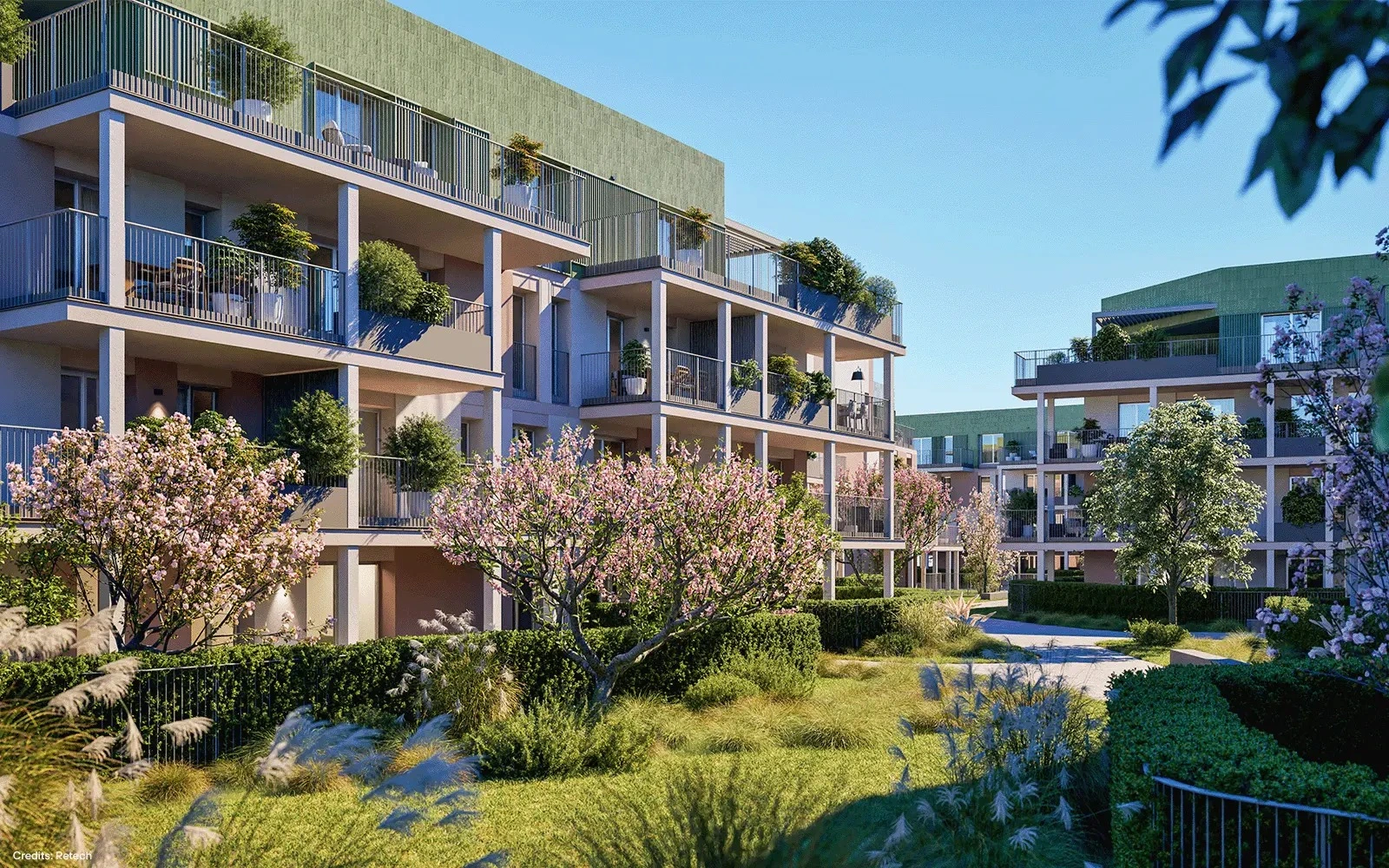
In the residential sector, the new Milanese complex Corte GEA stands out, optimised to offer living comfort, sustainability and integration with the landscape.
Other projects carried out by Incide Engineering that are in line with green building principles include:
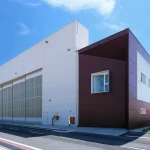
- Airport hangars, such as the new PG109 at Rome Ciampino;
- in the entertainment sector, the new Thermal Forum in Abano Terme (PD);
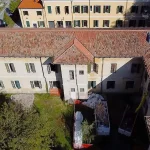
- the Pepe e Bellemo student accommodation, created through the restoration of the former barracks of the same name.